“Jaishawn Barham Penalized 15 Yards for Unsportsmanlike Conduct After Contact with Official but Remains in Game, Sparking Debate Among Fans”
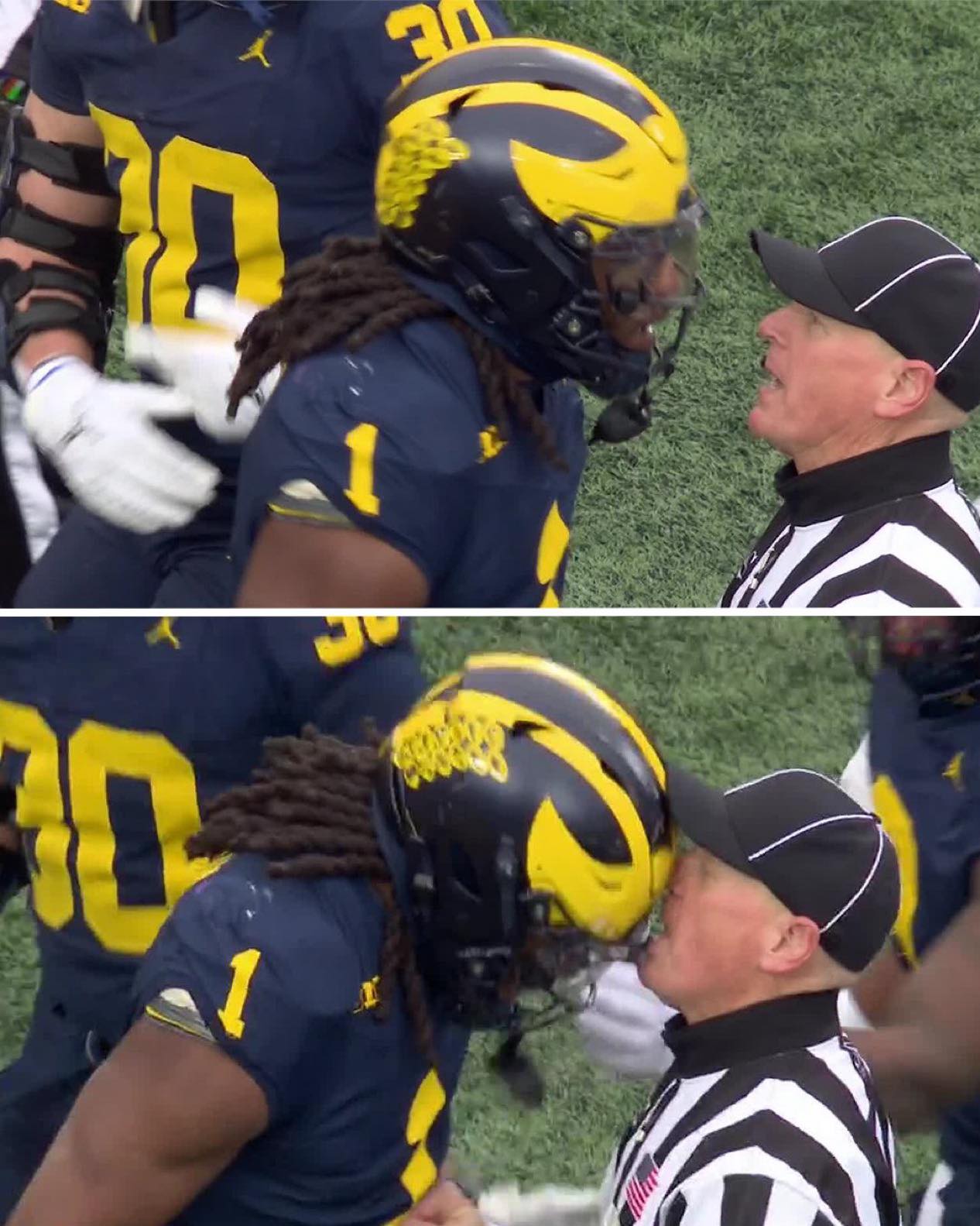
In a game that has already been filled with tension and high stakes, Jaishawn Barham found himself at the center of controversy after being assessed a 15-yard penalty for unsportsmanlike conduct following contact with an official. The incident occurred in the second half, when emotions were running high and the intensity of the matchup was at its peak. While the penalty itself was significant, the fact that Barham was not ejected from the game has sparked heated discussion among fans, analysts, and former players alike, with opinions divided on whether the officials handled the situation appropriately.
Barham, known for his competitive spirit and aggressive play on the field, has often been a polarizing figure. His style of play has won praise from supporters who admire his intensity, but it has also drawn criticism from those who feel his approach sometimes crosses the line. In this particular incident, Barham made contact with an official during a dispute over a call, an action that immediately drew the attention of referees and spectators. The official responded by assessing a 15-yard penalty for unsportsmanlike conduct, a clear signal that the behavior was unacceptable under the rules. However, rather than issuing an ejection, the referees allowed Barham to remain in the game, a decision that has left many questioning the consistency of officiating in high-profile matchups.
Fans took to social media almost immediately following the play, with opinions ranging from outrage to defense. Some argued that contact with an official should be met with an automatic ejection, citing the need to maintain respect and authority on the field. Others contended that Barham’s contact, while inappropriate, did not rise to the level of a flagrant offense deserving removal from the game. The debate has drawn attention not only to the incident itself but also to broader discussions about how penalties are enforced in modern football, the discretion given to referees, and the balance between discipline and maintaining the flow of the game.
Analysts reviewing the play noted that Barham’s actions appeared to be driven more by frustration than malice. The contact with the official was brief, and while it was enough to warrant the unsportsmanlike conduct flag, it did not involve any overt aggression or intent to harm. This distinction, they argued, may have influenced the officials’ decision not to eject him. The ability of referees to use judgment in such situations is a fundamental part of the game, yet it can also lead to inconsistencies that frustrate players, coaches, and fans. In Barham’s case, the referees opted for a measured response, penalizing the infraction while allowing him to continue contributing to his team on the field.
The incident also has implications for Barham’s reputation. While he has previously been praised for his athleticism and leadership, moments like this can cast a shadow over his public perception. For some fans, the penalty reinforces a narrative of Barham as a fiery and sometimes uncontrollable player. For others, the fact that he remained in the game despite the infraction may suggest that his competitive nature is being unfairly scrutinized or that officials are exercising leniency in certain situations. The debate over Barham’s actions has become a talking point not just among fans but also in sports media, where commentators are weighing the nuances of sportsmanship, respect for officials, and the limits of acceptable behavior on the field.
Coaches have weighed in as well, emphasizing the importance of controlling emotions in high-pressure situations. The incident serves as a reminder to players that while passion and intensity are valuable assets, maintaining composure is critical to avoid penalties that can impact the outcome of the game. From a strategic perspective, a 15-yard penalty can have significant consequences, potentially altering field position and momentum at crucial moments. Teams often stress discipline not only to prevent physical altercations but also to ensure that players’ actions do not inadvertently give opponents an advantage. In this instance, Barham’s penalty may have had tactical ramifications, adding another layer to the discussion surrounding his conduct.
The conversation surrounding this play also reflects broader trends in how professional and collegiate sports address interactions between players and officials. With the stakes of games higher than ever and the scrutiny from fans and media intense, the enforcement of rules and the consequences for unsportsmanlike behavior are under constant evaluation. Some argue for stricter, more automatic penalties to protect officials and uphold the integrity of the game, while others advocate for discretion that considers context, intent, and the flow of the contest. Barham’s situation exemplifies the tension between these perspectives, illustrating the challenges officials face in real time as they make split-second decisions that can influence both the game and public perception.
In the aftermath of the penalty, discussions have also emerged about how teams prepare players to interact with officials, both in terms of strategy and sportsmanship. Coaches frequently emphasize communication, restraint, and understanding the rules as key components of player development. Barham’s penalty, while certainly an isolated incident, serves as a teachable moment for teammates and aspiring athletes. It highlights the fine line between competitive fire and unacceptable conduct, reminding players that actions on the field are always under scrutiny and can have lasting implications.
As the game progressed following the incident, Barham continued to play a significant role for his team, demonstrating that the penalty did not diminish his presence or performance. This outcome may reinforce the argument of those who believe that the officials’ decision to allow him to remain in the game was appropriate. Yet, it also perpetuates the debate, as opponents and neutral observers question whether maintaining his participation sent the right message about accountability and respect for officials. The nuances of the situation make it a compelling topic for sports commentary, fan discussions, and ongoing analysis.
Ultimately, Jaishawn Barham’s 15-yard penalty for unsportsmanlike conduct, coupled with his continued presence on the field, has become a microcosm of larger conversations in the world of football. It raises questions about officiating consistency, the balance between punishment and game flow, and the responsibilities of players to uphold standards of sportsmanship. While opinions will remain divided, the incident has undeniably captured attention and sparked debate, reflecting the passion and intensity that make football a sport followed by millions of fans around the world.
For Barham, the episode is likely to be a defining moment in discussions about his career, character, and competitive style. While the penalty itself was a setback, his ability to remain in the game demonstrates both the discretion exercised by officials and the resilience required of players in high-pressure environments. Fans, analysts, and sportswriters will continue to dissect the play, each bringing their own perspectives on fairness, conduct, and the rules of the game.
In the end, the story of Jaishawn Barham’s unsportsmanlike conduct penalty is more than just a single play. It serves as a lens through which to examine the complexities of modern football, the challenges of officiating, and the expectations placed on athletes in highly charged competitive settings. Whether viewed as a moment of frustration, a lapse in judgment, or an example of lenient officiating, it has generated meaningful discussion and will likely remain a point of reference in debates about sportsmanship, discipline, and player conduct for years to come.