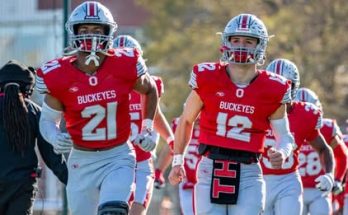
“Former Ohio State Defensive Coordinator Kerry Coombs Joins Michigan as Special Teams Coordinator, Adding Experience and Strategic Depth to Wolverines’ Coaching Staff”
Former Ohio State defensive coordinator Kerry Coombs has officially joined the University of Michigan’s football program as the Wolverines’ new special teams coordinator, a move that has sent ripples throughout the college football landscape. Announced on Saturday, Coombs’ hiring marks a significant addition to Michigan’s coaching staff, bringing with him a wealth of experience, strategic acumen, and a proven track record in defensive coordination and special teams excellence. His transition from a long tenure at Ohio State to Michigan is one of the most talked-about coaching shifts in recent years, highlighting the increasingly competitive nature of college football coaching moves and the continuing rivalry between two of the sport’s most storied programs.
Coombs’ football journey is marked by decades of experience at the highest levels of collegiate coaching. Before his tenure at Ohio State, where he earned national recognition for his defensive schemes and ability to develop elite defensive backs, Coombs held numerous positions across college football programs. His expertise spans both defense and special teams, allowing him to bring a versatile approach to game planning and player development. At Ohio State, Coombs became known for his meticulous preparation, keen eye for talent, and innovative strategies that often gave his teams an edge in crucial game moments. Transitioning to Michigan, he is expected to leverage this same expertise to elevate the Wolverines’ special teams units, which play a critical role in field position, momentum, and game-deciding plays.
The move of Kerry Coombs to Michigan is particularly noteworthy given the longstanding rivalry between Ohio State and Michigan, one of the most intense in all of college football. Historically, coaches crossing this rivalry divide is rare and often draws significant attention from fans, media, and analysts alike. Coombs’ decision underscores the professional nature of coaching careers, where opportunities for growth, influence, and championship contention can drive moves that transcend traditional rivalries. His hiring is expected to bring not only tactical knowledge but also an insider’s understanding of one of Michigan’s primary competitors, potentially offering the Wolverines subtle advantages in preparation and game planning against Ohio State in future matchups.
Special teams, often an overlooked but crucial element of football, will be the primary focus of Coombs’ work with Michigan. Special teams encompass all kicking plays, punts, kickoffs, field goals, and extra points, as well as the defensive coverage units that counter these efforts. Success in these areas can dramatically affect a team’s ability to control field position, generate scoring opportunities, and prevent game-altering mistakes. Coombs’ reputation for precision and attention to detail is expected to translate well to this role, where meticulous planning and execution are essential. Michigan fans and analysts will be watching closely to see how his strategies transform kickoff coverage, punt returns, and field goal efficiency in the coming seasons.
At Ohio State, Coombs developed a reputation as a coach capable of maximizing player potential and adapting schemes to the strengths of his personnel. His defensive units consistently ranked among the top in the nation, and his ability to develop standout talent contributed to numerous Ohio State players advancing to the NFL. While his primary role in Columbus was defensive, his background in special teams is extensive, having previously coordinated both units in earlier stages of his career. This dual expertise allows him to approach special teams with a comprehensive understanding of both defensive and offensive principles, creating innovative strategies that can catch opponents off guard and influence the outcome of tightly contested games.
Michigan’s decision to hire Coombs reflects a broader trend in college football where programs are increasingly willing to recruit top coaching talent from rival schools to gain competitive advantages. The Wolverines have demonstrated a commitment to building a coaching staff that combines experience, tactical knowledge, and proven results. By bringing in Coombs, Michigan is signaling its intent to elevate every aspect of its football program, ensuring that special teams play a role as impactful as offense and defense. The Wolverines’ leadership expects Coombs to bring the same level of discipline, preparation, and execution that he demonstrated throughout his career, thereby strengthening the team’s overall competitiveness in the Big Ten Conference and on the national stage.
Coombs’ hiring also has significant implications for recruiting. College football is highly competitive, and coaches often serve as a critical factor in attracting top talent. With Coombs’ name recognition, experience, and Ohio State pedigree, Michigan is positioned to appeal to recruits who value coaching stability, player development, and opportunities to work with a nationally recognized coach. His track record of developing NFL-caliber players is likely to resonate with recruits looking to maximize their potential and enhance their prospects at the next level. This recruiting impact, coupled with his strategic contributions, makes Coombs’ arrival at Michigan an all-encompassing boost to the program’s long-term success.
The announcement of Coombs’ hiring has already generated discussion across media outlets, social platforms, and fan forums. Analysts have speculated on how quickly he can implement his special teams philosophies and what immediate impacts can be expected in the upcoming season. While transitions from one program to another often come with a period of adjustment, Coombs’ experience and professional reputation suggest that he will be able to integrate seamlessly with Michigan’s existing coaching staff. Collaboration with the head coach and other coordinators will be essential, and Coombs’ proven ability to communicate, teach, and lead will be central to maximizing the effectiveness of his special teams units.
Historically, successful special teams play has often been the difference in close college football games, influencing outcomes in critical moments such as championship games and rivalry matchups. Michigan’s hiring of Kerry Coombs signals a strategic recognition of this reality, emphasizing that attention to detail, discipline, and innovation on special teams can have a measurable impact on winning games. Fans of the Wolverines can anticipate a renewed focus on coverage schemes, return strategies, and kicking efficiency, all areas where Coombs has historically excelled. His impact is expected to be felt not just in statistics but in the intangible aspects of football—team discipline, preparation, and situational awareness.
In conclusion, Kerry Coombs’ transition from Ohio State to Michigan as the Wolverines’ special teams coordinator represents one of the most high-profile coaching moves in recent college football history. His extensive experience, tactical knowledge, and ability to develop players make him a valuable asset for Michigan as the program seeks to compete at the highest levels. The move carries both strategic and symbolic significance, bridging a historic rivalry while underscoring the professional nature of coaching careers. As Coombs begins his tenure with Michigan, attention will focus on how his expertise translates into on-field success, improved special teams performance, and an enhanced ability for the Wolverines to compete against the nation’s elite programs. The coming seasons will reveal the full impact of this hire, but one thing is clear: Michigan has added a coach capable of making a significant difference in both strategy and execution, signaling its intent to continue building a football program that competes at the very top of college football.