**“Ohio State Defensive End C.J. Hicks Strategically Preserves Redshirt After Appearing in Only Four Regular-Season Games, Positioning Himself for a Potential Postseason Return”**
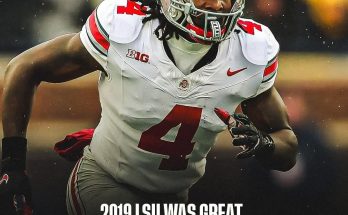
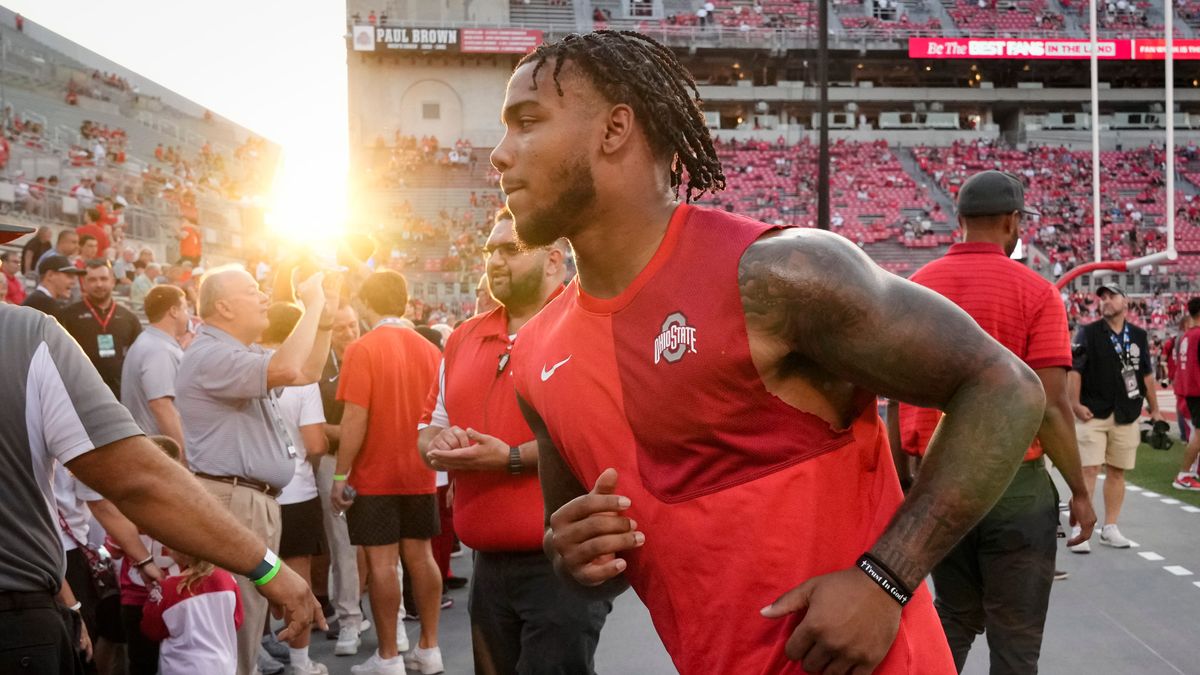
Ohio State has long been known for its ability to navigate roster management with precision, but few examples highlight that strategy better than the situation surrounding defensive end C.J. Hicks. After appearing in only four regular-season games, Hicks preserved his redshirt eligibility, a calculated move that not only safeguards an additional year of development but also positions him as a potential surprise contributor in the postseason. For a program constantly balancing present expectations with future planning, Hicks’ path reflects a modern approach to player utilization, competitive depth, and long-term team building.
From the moment Hicks joined the Buckeyes, he carried the reputation of being a highly athletic, high-upside defensive weapon—someone capable of affecting the game at multiple levels. Coaches raved about his explosiveness, his adaptability, his motor, and his willingness to learn. Yet Ohio State has always been mindful that physically talented players are not always best served by being pushed into immediate full-season action. In Hicks’ case, the staff made a deliberate decision: get him game experience, but protect his eligibility. The NCAA rule allowing players to participate in up to four games while retaining a redshirt has become a strategic tool for top programs, and Hicks represents a textbook application of that opportunity.
Through the four games in which he appeared, Hicks made his presence felt. Whether it was collapsing the edge, offering speed off the perimeter, contributing on special teams, or simply providing disruptive snaps that gave opposing offenses something extra to think about, he showed why Ohio State values him so highly. His limited appearances were not a reflection of ability but rather of long-term planning. The Buckeyes knew they had veteran depth at defensive end this season, including players capable of anchoring the unit through the gauntlet of Big Ten play. With veterans securing the bulk of snaps, Hicks’ situation became ideal for a developmental year—practicing with the starters, learning the scheme more deeply, and getting spot-game experience without burning a full year of eligibility.
What makes Hicks’ redshirt particularly intriguing is the possibility of a postseason return. Unlike in previous eras, players who redshirt are not confined to the sidelines during bowl season or playoff games, provided they stay within the four-game threshold. That means Ohio State could activate Hicks strategically, using his speed and athleticism as either a rotational piece or even as a situational weapon in high-stakes postseason moments. This becomes even more important when considering the physical toll of a long season, where injuries, fatigue, and matchup challenges often require depth players to step into roles on short notice.
Should the Buckeyes find themselves facing a high-tempo, explosive offense in the postseason—something almost guaranteed in today’s playoff landscape—Hicks could become an unexpected factor. His burst off the line could help disrupt timing-based passing attacks, and his ability to chase down mobile quarterbacks could be invaluable against teams that rely on dual-threat playmakers. Even limited snaps could be the difference between containing a drive and giving up a momentum-shifting play.
But even beyond the postseason implications, Hicks’ preserved redshirt year holds enormous value for the future of the program. Ohio State is constantly replenishing talent, but continuity and experience are becoming just as important as raw recruiting rankings. With Hicks maintaining another full year of eligibility, the Buckeyes have the opportunity to build a defensive front around a more seasoned, physically matured version of the same player who flashed promise this season. For Hicks himself, the developmental benefits are substantial. Another offseason in the strength program, another year of film study, another year learning from elite defensive linemen—these experiences often turn good players into great ones.
His situation also helps stabilize the defensive depth chart. With several veterans potentially heading to the NFL Draft, having a redshirted Hicks ready to step into a larger role could be crucial. It ensures Ohio State does not face a sudden talent drop-off, and it gives defensive coordinators a clearer picture of how to structure next year’s schemes. Hicks’ versatility could allow the Buckeyes to expand their playbook, introducing more hybrid looks, edge blitz packages, and rotational pressure sets designed to maximize his strengths.
From a broader perspective, Hicks’ redshirt preservation demonstrates how programs like Ohio State adapt to the evolving landscape of college football. Between the transfer portal, NIL considerations, playoff expansion, and shifting conference dynamics, maintaining continuity and managing player pathways are more important than ever. The ability to retain a year of eligibility for a talented defender while still getting meaningful snaps represents a competitive advantage that championship-caliber programs cannot overlook. Hicks’ situation is a perfect study in how to merge short-term needs with long-term vision.
For fans, the excitement lies in the unknown. Hicks has shown flashes, but not yet the full picture of what he might become when finally unleashed for a complete season. Redshirting sometimes frustrates supporters eager to see immediate production, but more often than not, it pays dividends. The thought of Hicks emerging next season—bigger, stronger, smarter, and more polished—generates anticipation within the fanbase and confidence within the coaching staff.
As Ohio State’s postseason journey takes shape, all eyes will be on how the team handles its personnel. And while Hicks may not be the first name mentioned in preview discussions, his presence lingers as a potential X-factor. Football is a sport defined by preparation intersecting with opportunity, and Hicks is a player positioned right at that intersection. Whether or not he takes the field in the postseason, the strategic decision to preserve his redshirt ensures his value to the program lasts far beyond the current campaign.
Ultimately, C.J. Hicks exemplifies the modern blueprint for elite college programs: recruit elite athleticism, develop it patiently, deploy it strategically, and build a pipeline of talent that sustains success year after year. His preserved redshirt is not merely a footnote in a season narrative—it is a foundational piece of Ohio State’s defensive future.