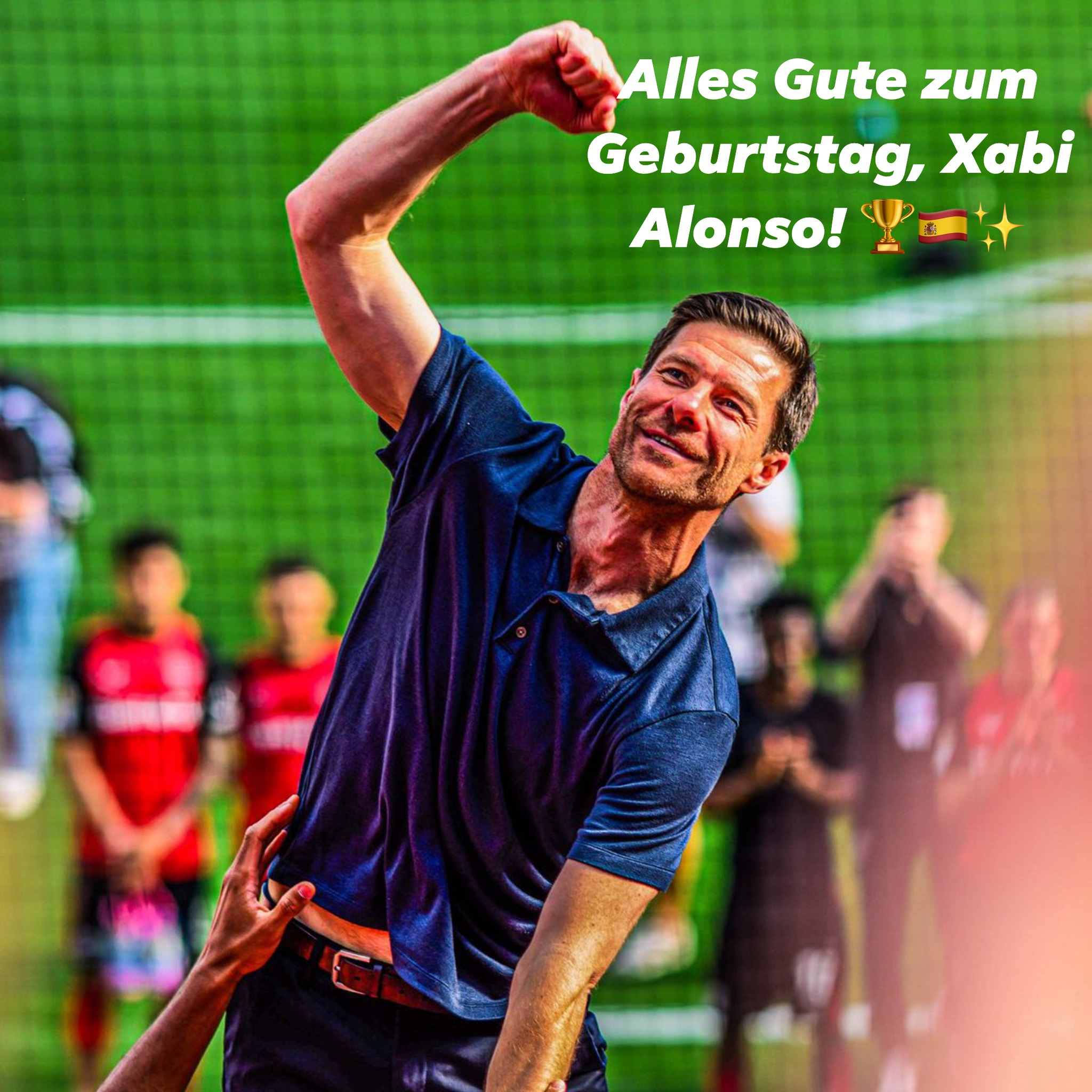
“Xabi Alonso Transforms Bayer Leverkusen from 16th in the League to Triple Trophy Winners, Securing Bundesliga, DFB Cup, and DFL Super Cup”
When Xabi Alonso took over Bayer Leverkusen, the club was languishing in a precarious 16th place in the Bundesliga, teetering dangerously close to relegation. Fans were anxious, management was under pressure, and the team lacked the cohesion and confidence necessary to compete at the highest level. The club needed a leader, a visionary who could not only stabilize the team but also inspire it to achieve greatness. Enter Xabi Alonso, a former midfield maestro with a storied career at clubs like Liverpool, Real Madrid, and Bayern Munich, whose understanding of the game, tactical intelligence, and leadership qualities were immediately evident. From the moment Alonso assumed control, it became clear that Bayer Leverkusen was on the cusp of a remarkable transformation.
Alonso’s approach to management was methodical and meticulous, emphasizing discipline, structure, and a clear tactical identity. He immediately assessed the squad’s strengths and weaknesses, identifying areas that required improvement while nurturing the potential already present in key players. His philosophy centered around possession-based football, intelligent pressing, and fluid transitions between defense and attack, ensuring that every player understood their role both on and off the ball. Unlike many managers who attempt radical overhauls overnight, Alonso implemented changes gradually, building trust and instilling confidence within the squad. This patient yet determined approach paid immediate dividends, as the team began to show signs of resilience, tactical awareness, and creativity.
One of Alonso’s first priorities was to stabilize the defensive line, which had been vulnerable under previous management. He introduced a disciplined backline that communicated effectively, maintained positional awareness, and reduced costly errors that had previously plagued the team. The goalkeeper and defenders became more cohesive, and the team’s ability to withstand pressure improved dramatically. Simultaneously, Alonso focused on reinvigorating the midfield, leveraging his own experience as a world-class playmaker. By orchestrating intelligent passing patterns, controlling the tempo of games, and creating spaces for attacking players, he ensured that Leverkusen could dominate possession and dictate the flow of matches. This combination of defensive solidity and midfield creativity became the hallmark of Alonso’s tenure.
Alonso’s impact was not limited to tactics alone; he also transformed the mentality of the players. He instilled a winning mindset, emphasizing the importance of consistency, perseverance, and self-belief. Training sessions were rigorous yet purposeful, designed to prepare the squad for the challenges of high-stakes competition. Players began to trust one another, communicate more effectively on the pitch, and demonstrate resilience in difficult situations. Under Alonso, the team developed a collective identity, a sense of unity that allowed them to overcome obstacles and achieve results that had previously seemed unattainable. This cultural shift was just as significant as the tactical improvements, as it laid the foundation for the extraordinary achievements that followed.
The results of Alonso’s transformative approach became evident as Bayer Leverkusen’s performances improved dramatically. The team began to climb the Bundesliga table, showcasing a blend of technical skill, tactical intelligence, and relentless determination. Defeats became rare, draws turned into victories, and the players’ confidence soared. Fans, once worried about relegation, were now witnessing a team capable of challenging for the title. As the season progressed, Leverkusen displayed remarkable consistency, combining defensive resilience with attacking flair. Each match became a testament to Alonso’s vision, as the team executed complex game plans with precision and flair. The club’s rise from 16th place to the upper echelons of the Bundesliga was nothing short of miraculous.
Under Alonso’s guidance, Bayer Leverkusen achieved a feat that few could have imagined: winning the Bundesliga title while remaining undefeated throughout the campaign. This remarkable accomplishment cemented Alonso’s reputation as one of the most innovative and effective managers in European football. The undefeated season was a testament to the team’s tactical discipline, mental strength, and unwavering commitment to Alonso’s philosophy. Fans celebrated a historic triumph, while pundits marveled at the transformation of a team that had once been struggling at the bottom of the table. Winning the Bundesliga was a milestone, but it was only the beginning of Alonso’s extraordinary impact on the club.
In addition to domestic league success, Alonso led Bayer Leverkusen to victory in the DFB Cup, showcasing the team’s ability to perform in knockout competitions. The cup run demonstrated the squad’s resilience and adaptability, as they navigated high-pressure matches against formidable opponents. Each round was a test of character, tactical acumen, and composure, and Alonso’s strategic adjustments proved decisive. The DFB Cup victory added another layer of prestige to Alonso’s tenure, highlighting his ability to inspire players to deliver under pressure and achieve glory across multiple competitions. It was a triumph that reinforced the club’s upward trajectory and solidified Alonso’s status as a transformative figure.
The crowning achievement of Alonso’s managerial journey with Bayer Leverkusen came with the DFL Super Cup, a contest that pitted the club against other elite teams in Germany. Winning the Super Cup was both a symbolic and tangible demonstration of the team’s dominance under Alonso. It signified that Leverkusen was not merely a one-season wonder but a club capable of sustained success. The victory in the Super Cup further boosted morale, energized the fanbase, and reinforced the sense of belief and ambition within the squad. Alonso’s meticulous planning, tactical expertise, and motivational skills were once again on full display, as the team executed a flawless performance to lift yet another trophy.
Beyond the tangible successes of titles and trophies, Alonso’s influence extended to the broader culture of Bayer Leverkusen. He cultivated a professional environment that emphasized growth, accountability, and excellence. Young players flourished under his mentorship, learning from his wealth of experience and adopting his disciplined approach to training and competition. Established players reached new heights, refining their skills and contributing meaningfully to the team’s collective success. Alonso’s ability to balance individual development with team objectives created a harmonious environment in which players could thrive, resulting in a sustainable model for long-term success.
As fans and pundits celebrated Alonso’s remarkable achievements, his birthday provided a perfect moment to reflect on the extraordinary journey he had undertaken with Bayer Leverkusen. From inheriting a team in 16th place to delivering three major trophies—the Bundesliga, the DFB Cup, and the DFL Super Cup—his impact was undeniable. Alonso’s blend of tactical genius, leadership, and inspirational guidance transformed the club in ways that few could have predicted. The celebrations were not just about titles but about the profound transformation of a team, a culture, and a community that had regained hope, pride, and ambition under his stewardship.
In conclusion, Xabi Alonso’s tenure at Bayer Leverkusen stands as a testament to what visionary leadership, tactical intelligence, and unwavering commitment can achieve in football. Taking over a struggling team and turning them into triple trophy winners is an extraordinary feat, one that underscores Alonso’s exceptional abilities as a manager. His influence extended far beyond the pitch, shaping the mentality, culture, and identity of the club. As Bayer Leverkusen continues to build on this foundation, Alonso’s legacy will endure as a source of inspiration for players, fans, and aspiring managers alike. On his birthday, it is only fitting to celebrate not just the man but the remarkable achievements he has brought to the club, leaving an indelible mark on German football and solidifying his place among the sport’s modern greats.