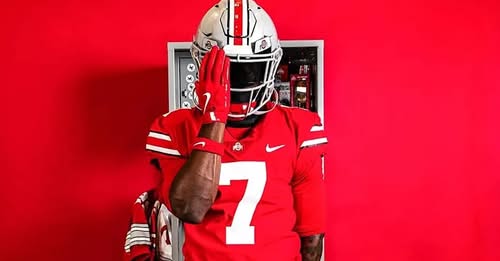
“Rivals Report Raises Questions Over Whether Legend Bey Personally Signed Paperwork Sent to Tennessee or If It Was Someone Else”
A recent report by Rivals’ Keegan Pope has ignited a swirl of speculation and curiosity among college football fans and analysts alike, raising questions over a pivotal administrative step in the recruitment of one of the nation’s top high school prospects, Legend Bey. According to sources close to the situation, there is uncertainty regarding whether Bey himself was the one who signed the paperwork that was ultimately sent to the University of Tennessee, or whether it was someone else acting on his behalf. This revelation has quickly captured the attention of both fans and insiders, highlighting the complex and often opaque processes behind the recruitment of elite athletes in modern college football.
Legend Bey, widely regarded as one of the most talented players in his class, has been the subject of intense scrutiny and interest from top programs across the country. From the moment he emerged as a highly touted recruit, analysts have closely monitored his every move, from official visits to social media posts, and now to administrative paperwork that could play a decisive role in determining his collegiate future. While much of the focus in recruiting narratives tends to be on the athlete’s performance on the field or during workouts, the signing of documents, compliance paperwork, and the finalization of commitments are equally crucial elements that can dramatically influence the trajectory of a program and the player alike.
The report from Rivals introduces a layer of ambiguity that is uncommon in the usually straightforward world of recruiting announcements. While it is standard for top recruits or their guardians to sign documents such as letters of intent or financial aid forms, the suggestion that someone else might have completed this process on Bey’s behalf raises questions about procedural accuracy and the integrity of the official record. Sources close to the situation emphasized that the issue is not necessarily a matter of wrongdoing, but rather a point of confusion that could have implications for both the player and the program he ultimately joins. In an era where compliance with NCAA regulations is rigorously monitored, even minor discrepancies or misunderstandings can have outsized consequences.
For Tennessee, the uncertainty adds a complex dimension to what was already a high-profile recruiting victory. The Volunteers have been actively pursuing elite talent in recent years, and landing a prospect of Bey’s caliber would represent a significant achievement for the program. However, any ambiguity surrounding the legitimacy of the paperwork could create an administrative headache for the university’s compliance staff. NCAA rules are stringent, and universities are held to exacting standards to ensure that all recruitment and enrollment procedures are properly executed. While it is not yet clear whether any formal action will be required, the mere possibility that the paperwork may not have been personally signed by Bey has sparked conversations among observers about the diligence required in managing high-stakes recruitment.
From the perspective of fans and commentators, the intrigue surrounding Bey’s paperwork adds an almost narrative-like tension to the recruiting process. In the age of social media, where every detail about high-profile recruits is dissected and debated in real-time, even administrative technicalities can become fodder for widespread speculation. Supporters of Tennessee may feel a mixture of excitement and apprehension as they await official clarification, while fans of rival programs could seize on the ambiguity as a reason to question the legitimacy of the commitment. This dynamic underscores how the recruitment of top-tier athletes is not only a matter of talent acquisition but also a highly publicized drama in which every action, from signing a document to posting on Instagram, is scrutinized.
It is worth noting that in many cases, paperwork for elite athletes is signed with the assistance of family members, legal guardians, or trusted advisors, especially when the documents involve complex contractual or compliance considerations. This practice is not unusual and is often designed to ensure that the athlete fully understands the implications of the agreement they are entering. Nevertheless, the fact that sources have raised questions specifically about whether Bey personally executed the paperwork indicates that this particular instance has generated a level of attention beyond the typical procedural norms. It highlights the unique pressure and visibility associated with being one of the most coveted players in the nation.
Recruiting analysts have pointed out that the uncertainty surrounding Bey’s signature could have implications beyond the immediate administrative concerns. For instance, it could influence perceptions of Bey’s commitment, even if the reality is merely procedural rather than substantive. In the competitive landscape of college football recruiting, perception often carries nearly as much weight as reality. Programs must carefully manage both the recruitment process and the surrounding narratives to maintain credibility with fans, boosters, and governing bodies. Tennessee, in particular, has invested heavily in recruiting infrastructure and has cultivated a reputation for attracting top talent, so any questions about the administrative accuracy of Bey’s commitment could be especially sensitive.
While the situation develops, the focus inevitably returns to Bey himself, whose talent and potential continue to generate excitement among fans and analysts alike. Regardless of who signed the paperwork, his athletic performance, work ethic, and ability to impact games remain the primary determinants of his future success at the collegiate level. However, the administrative uncertainty adds an additional layer to his recruitment story, serving as a reminder that even the most talented athletes are subject to procedural considerations that can influence the timing and perception of their commitments. It also emphasizes the broader context in which top recruits operate, where every action is observed, and even routine administrative tasks can become part of the public narrative.
Legal and compliance experts suggest that situations like this, while unusual, are not unprecedented. In high-profile recruitment cases, the involvement of advisors, guardians, or family members in signing documentation can sometimes lead to ambiguity. However, experts caution that clarity is essential to avoid misunderstandings that could result in compliance challenges. Universities often have dedicated teams to verify the authenticity of signatures and the proper execution of all recruitment-related paperwork precisely to prevent such issues. As a result, it is likely that Tennessee’s staff will seek to confirm the details as swiftly as possible to ensure that all processes meet regulatory standards and that the player’s commitment is officially recognized without question.
The Rivals report, therefore, serves multiple functions. It not only informs the public about a potential administrative nuance in a high-profile recruitment but also highlights the intricate web of factors that contribute to modern college football recruiting. From athletic performance to paperwork execution, from compliance considerations to public perception, every aspect is interconnected. The story surrounding Legend Bey’s paperwork is a microcosm of the broader realities faced by elite athletes and the programs vying for their talents. It underscores the importance of meticulous attention to detail, the influence of public narratives, and the ongoing scrutiny that accompanies being a top recruit in today’s sports landscape.
As the situation unfolds, observers will be watching closely for any official statements from Tennessee, Bey, or his representatives. Clarification regarding who signed the paperwork could quickly quell speculation or, conversely, prompt further analysis depending on the details that emerge. In either case, the report by Rivals has already succeeded in drawing attention to an aspect of the recruitment process that often goes unnoticed but carries significant weight in ensuring the legitimacy of commitments and the smooth transition of athletes into collegiate programs. Fans, analysts, and stakeholders alike will undoubtedly continue to monitor developments, eager for clarity on a situation that combines both the drama of high-stakes recruiting and the procedural intricacies behind the scenes.
Ultimately, the key takeaway from the report is that even in a world dominated by athletic prowess and performance metrics, the administrative and compliance dimensions of recruitment remain critical. The question of whether Legend Bey personally signed the paperwork sent to Tennessee may appear minor at first glance, but it reflects broader themes of oversight, accountability, and transparency that are central to the integrity of collegiate athletics. As the discussion continues, it will serve as a reminder to all involved in recruitment—players, families, advisors, and universities alike—that precision in every aspect of the process is essential, and that even seemingly small procedural details can capture national attention when associated with an elite athlete like Legend Bey.