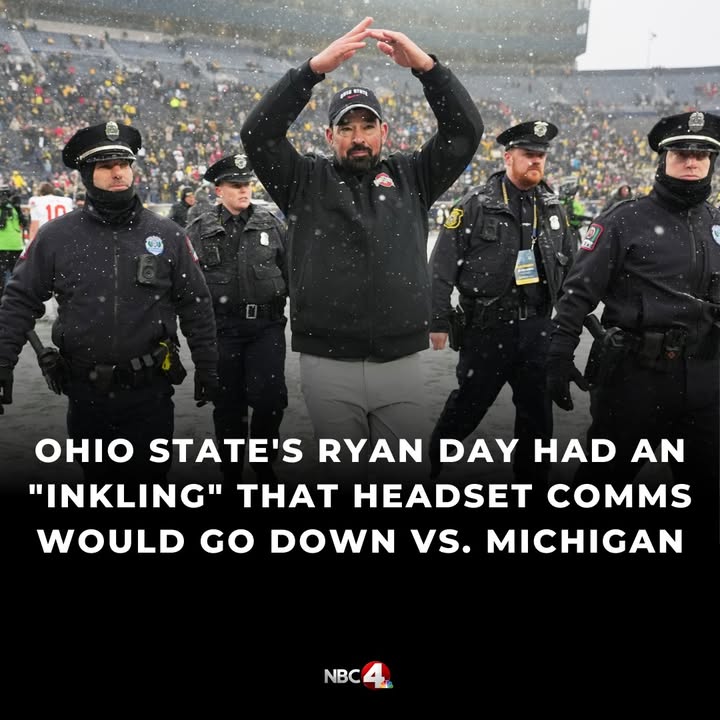
“Ohio State Coach Ryan Day Anticipates Potential Audio Failure with QB Julian Sayin in Michigan, Revealing Confidence After Being Asked Twice”
Ohio State’s visit to Michigan is always more than just a football game; it is a clash of legacies, pride, and strategy, where every detail can become pivotal. In preparation for this high-stakes matchup, Ohio State head coach Ryan Day demonstrated his meticulous approach to planning by considering even the most unlikely contingencies. One such contingency involved the audio system used by quarterback Julian Sayin, a cutting-edge communication tool that allows the quarterback to receive real-time coaching instructions during the game. The thought of this system failing mid-game might seem minor to some, but to Day, it was a scenario worth anticipating. In the days leading up to the game, reporters noticed Day’s calm demeanor, his meticulous preparation, and his willingness to speak openly about potential challenges, including this one, which is not often publicly discussed.
When asked directly, not once but twice, how he knew that the audio system might fail or have interruptions, Ryan Day’s response was a mixture of experience, foresight, and a deep understanding of the technical aspects of modern football operations. He did not hesitate, showing a level of confidence that comes from years of navigating high-pressure situations and understanding that technology, while helpful, is never infallible. Day’s awareness of the potential for failure reflects a broader philosophy that runs through the Ohio State program: always be prepared for the unexpected, and never leave critical aspects of performance to chance. In a sport where a single miscommunication can alter the outcome of a game, this attention to detail can make the difference between victory and defeat.
The quarterback position, particularly in high-stakes games like the one against Michigan, demands precision, focus, and a strong connection with the coaching staff. Julian Sayin, as the starter and primary decision-maker on the field, relies on both his preparation and the ability to receive timely information from his coaches. The audio system acts as a bridge between the sidelines and Sayin, allowing real-time play adjustments, audible changes, and strategic advice without the need for hand signals or pauses in gameplay. However, Day’s recognition of the system’s potential vulnerabilities highlights the reality that even in technologically advanced programs, human judgment and pre-prepared contingency plans are paramount.
Ryan Day’s foresight regarding the audio system failure also underscores his broader coaching philosophy. Ohio State has consistently emphasized adaptability, teaching its players not just plays and formations but also how to respond when circumstances deviate from expectations. Day’s willingness to openly discuss the possibility of audio disruption sends a subtle but powerful message to his team: anticipate problems, stay calm under pressure, and maintain composure when faced with uncertainty. It is not about expecting failure but about preparing for it so that when challenges arise, the team can respond seamlessly, minimizing disruption to performance and maximizing the chances of success.
During his press interactions, Day’s demeanor reflected a combination of humor, confidence, and strategic transparency. Reporters asked him twice about his prediction regarding the potential audio issues, and each time, he answered with a calm certainty that comes from preparation and experience. He explained that such situations are not uncommon in high-pressure environments where equipment is pushed to its limits, and even the best systems can experience interruptions. By discussing the issue openly, Day also demonstrated trust in his players, particularly Sayin, signaling that while technology is a helpful tool, the quarterback has been trained to lead, make decisions, and execute plays even if the system fails. This dual approach of reliance on technology combined with human skill sets Ohio State apart from programs that may overly depend on digital aids, highlighting the depth of training and readiness instilled by Day and his coaching staff.
The consideration of audio system failures also opens a window into the broader complexities of modern football coaching. High-level programs like Ohio State incorporate advanced technology into their game-day operations, including real-time video analysis, sideline communication tools, and intricate play-calling systems. While these tools provide a competitive edge, they also introduce potential points of failure. Ryan Day’s proactive approach ensures that his team is not caught off guard, reflecting a culture that values both innovation and contingency planning. By preparing for these eventualities, Day demonstrates that success is not only about physical talent or strategic ingenuity but also about anticipating the unexpected and maintaining composure under pressure.
For Julian Sayin, the acknowledgment by his coach about potential audio failures may also serve as a confidence booster. Being prepared for a worst-case scenario allows him to approach the game with clarity, knowing that even if technology falters, he possesses the knowledge, instincts, and leadership to guide the team. The quarterback-coach relationship is strengthened through this transparency, building trust that extends beyond the technical aspects of play-calling. Sayin’s ability to adapt in real-time, coupled with Day’s preparation for every possible scenario, creates a resilient environment where the team can perform at its best, regardless of unexpected disruptions.
From a broader perspective, Ryan Day’s consideration of audio system contingencies highlights the meticulous nature of coaching at the highest level. It is a reminder that championship-level preparation extends beyond X’s and O’s to encompass every element that might influence performance. Equipment, communication systems, player psychology, and environmental factors all play a role in shaping outcomes. By thinking through these details, Day exemplifies the modern coach who combines traditional football knowledge with technological awareness and strategic foresight. His responses to the repeated questions from reporters not only convey expertise but also provide insight into the mindset required to lead a top-tier program like Ohio State.
As the game against Michigan approaches, the narrative surrounding Day and Sayin’s preparation offers a compelling subplot to an already intense rivalry. Fans and analysts alike are keenly aware of the significance of every play, decision, and adjustment. In this context, Day’s anticipation of potential audio failures may seem like a minor detail to some, but it is emblematic of a culture of preparation, resilience, and strategic depth. It is these behind-the-scenes considerations that often make the difference in closely contested games, illustrating that preparation is as much about anticipating contingencies as it is about executing the game plan.
In conclusion, Ohio State coach Ryan Day’s attention to the potential for audio system failure with quarterback Julian Sayin reflects a philosophy grounded in preparation, adaptability, and strategic foresight. His confident responses to repeated questions from reporters demonstrate a leadership style that values transparency, trust, and resilience. By planning for every eventuality, from the common to the unlikely, Day ensures that his team can respond effectively to unexpected challenges, maintaining composure and performance under pressure. This approach not only underscores the importance of human skill alongside technological tools but also highlights the depth of preparation required to compete at the highest level of college football. As Ohio State prepares to face Michigan, the meticulous planning, foresight, and confidence displayed by Ryan Day and his team provide a glimpse into the intricate, detail-oriented world of elite football coaching, where success is defined not just by talent, but by the ability to anticipate, adapt, and excel in any circumstance.