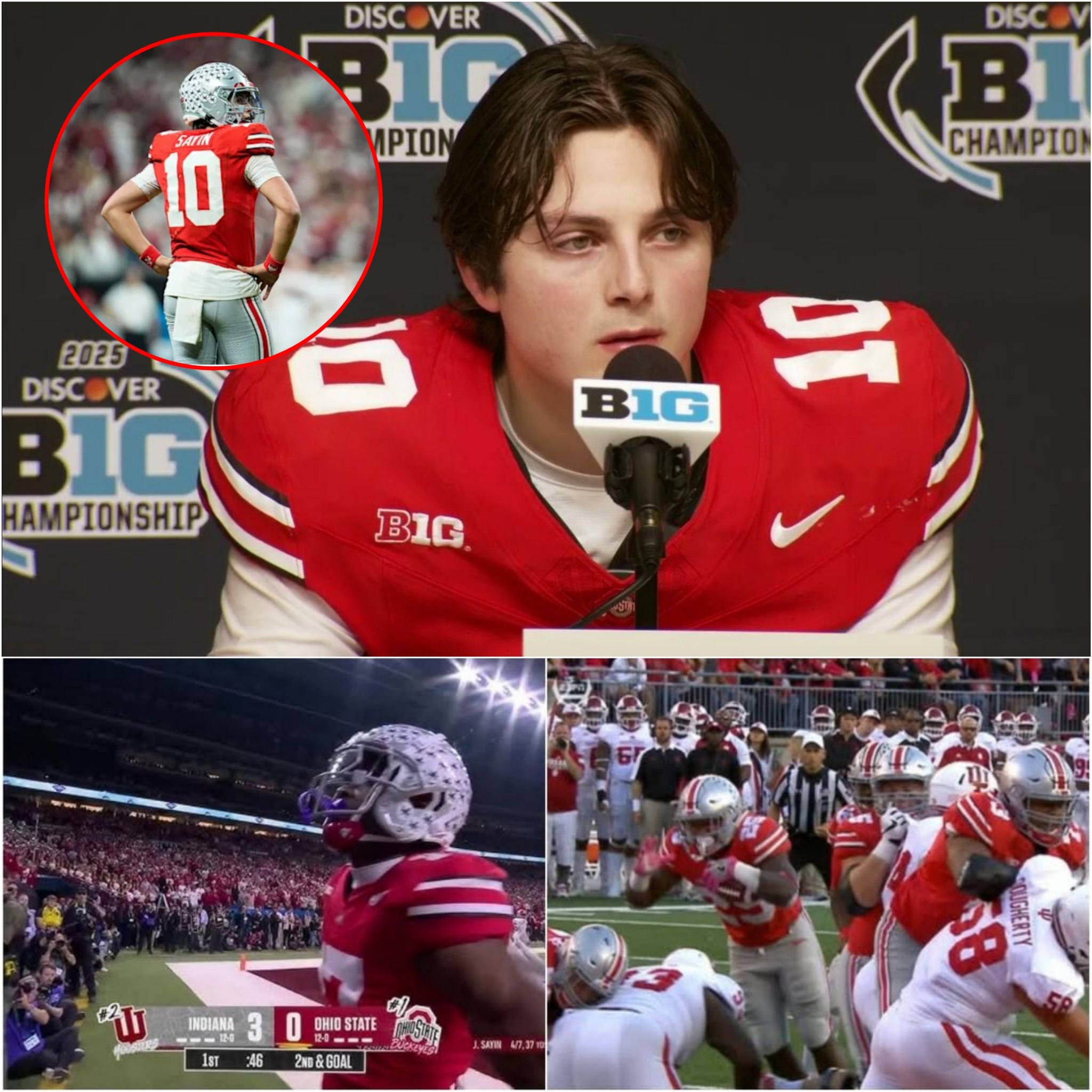
“Julian Sayin Delivers Heartfelt Postgame Message After Ohio State’s Painful 13–10 Loss to Indiana, Speaking Directly to Buckeye Fans and Owning the Team’s Crushing Setback”
Julian Sayin Delivering a heartfelt postgame message after Ohio State’s painful 13–10 loss to Indiana was more than just a quarterback addressing the media—it was a leader standing before a frustrated fanbase, a devastated locker room, and a nation stunned by one of the most unexpected results of the college football season. In moments like these, every word carries weight. Every pause echoes the disappointment hanging in the air. And every sentence reveals something deeper about a player’s character, resilience, and connection to the people who support him. Sayin didn’t shy away from the spotlight, nor did he deflect blame. He embraced the moment with honesty, emotion, and a sense of responsibility that resonated far beyond the press room walls.
The loss itself was a gut punch in every sense. Ohio State, a program accustomed to dominance, high-scoring offenses, and championship expectations, found itself stunned by an Indiana team that refused to back down. A 13–10 result doesn’t just tell the story of a defeat—it tells the story of missed opportunities, stalled drives, costly mistakes, and a sense of disbelief that spread from the players on the field to the fans in the stands. For Sayin, who entered the season carrying the weight of immense expectations and the hopes of an entire Buckeye community, this wasn’t just another game. It was one that would define narratives, spark debates, and invite criticism from every corner of the college football landscape.
Yet, when he stepped up to the podium, there was no bitterness. No excuses. No attempts to sugarcoat what had happened. Instead, Sayin spoke with the maturity of someone who understands what it means to wear the scarlet and gray, someone who feels every victory deeply and takes every loss personally. His message wasn’t crafted to protect his image or to sway public opinion—it was crafted from the raw emotion of a player who knows he could have done more, who knows his team could have done more, and who refuses to let one crushing defeat fracture the bond between the Buckeyes and their supporters.
He acknowledged the fans first—the millions who cheer, celebrate, and believe, even when belief becomes difficult. Sayin made it clear that their dedication never goes unnoticed. He spoke of the students who camp out for tickets, the alumni who follow the program religiously, and the families who gather around their televisions every Saturday, wearing their Buckeye gear with pride. He thanked them not just for supporting the team during its brightest moments but for standing by them in moments like this, when frustration and disappointment threaten to outweigh loyalty. Such gratitude, spoken at a moment of vulnerability, carried a powerful emotional weight.
Sayin then turned his attention to his teammates, emphasizing accountability. He didn’t blame anyone else. He didn’t imply that coaching decisions or individual mistakes cost them the game. Instead, he emphasized unity and ownership—values that define championship-level programs even when results fall short. He spoke about understanding the responsibility that comes with being the quarterback at Ohio State, a role that demands leadership not only in victory but especially in adversity. Sayin accepted that responsibility fully, making it clear that the loss begins with him, and the response must begin with him as well.
Throughout his remarks, there was a sense of determination that stood out. Yes, the loss hurt. Yes, it shocked the college football world. Yes, it was a game Ohio State had no business losing. But Sayin made one thing unmistakably clear: the story of this team is far from over. This defeat would not break them. If anything, it would become fuel—motivation to prepare harder, play smarter, and fight with even greater resolve in the games to come. Leaders are forged not in moments of comfort but in moments of crisis, and Sayin’s words reflected a player ready to turn heartbreak into growth.
What also made his message so impactful was how genuine it felt. There was no script, no polished media soundbite, no attempt to create a viral quote. Instead, there was authenticity. Fans watching sensed that. Reporters in the room sensed that. Even opposing teams will sense it when they prepare to face a Buckeye squad that refuses to let one bad night define its season. Sayin’s connection to the Ohio State community—something that cannot be faked or manufactured—was on full display. His voice didn’t crack, but the emotion behind it was undeniable. He spoke like someone who has embraced not just the responsibility of leading the team, but the privilege of representing the program.
The aftermath of such a loss will undoubtedly bring criticism. Some will question coaching decisions, others will dissect Sayin’s performance, and many will debate what this means for Ohio State’s playoff hopes or season trajectory. But those conversations fall into the background when a quarterback stands up and tells the world, “This is on me. This team will respond. And we’re going to fight our way back.” That kind of message matters. It shapes the mindset of a locker room. It inspires the fanbase to keep believing. And it shows the rest of college football that Ohio State is far from finished.
In the coming weeks, the Buckeyes will have opportunities to reclaim momentum and rebuild confidence. They will analyze film, correct mistakes, and refocus on the fundamentals that define successful teams. But even before the next game kicks off, Julian Sayin has already taken the first step toward turning the page. His words served as a rallying cry—a reminder that adversity reveals character, and that true leaders rise when the pressure is highest.
In the end, Sayin’s heartfelt postgame message was more than a reaction to a loss. It was a statement of identity, passion, and unwavering commitment to Ohio State football. And while the scoreboard told a painful story, his response told one of hope, resilience, and a belief that the Buckeyes will come back stronger than ever.