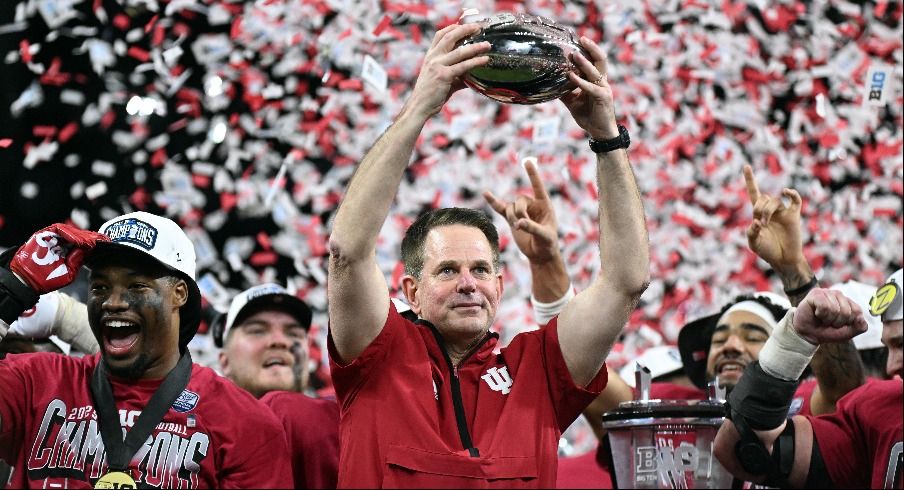
“Curt Cignetti Attributes Indiana’s Victory to Experience in Matchup Games and Aggressive Playcalling, Emphasizing ‘We Were Playing to Win, Not to Lose’”
Indiana coach Curt Cignetti provided a candid and insightful look into the mindset and strategy that fueled his team’s recent victory, offering a perspective that resonates well beyond the final score. Reflecting on the game, Cignetti emphasized that Indiana’s triumph was not merely a result of talent or preparation but a combination of experience in matchup games and bold, aggressive playcalling that set the Hoosiers apart in crucial moments. He made it clear that the approach was never about avoiding mistakes or playing conservatively; instead, it was a conscious commitment to playing to win, a philosophy that guided every decision on the field. “I wasn’t going to play not to lose, we were playing to win,” Cignetti stated, highlighting the mindset that he believes is essential for achieving meaningful victories in competitive football. The statement captures not only the immediate outcome of the game but also the broader philosophy of leadership and competitive courage that Cignetti seeks to instill in his players.
Cignetti’s acknowledgment of Indiana’s experience in matchup games is significant because it underscores the importance of situational awareness and adaptability in football. Matchup games, by their nature, require a deep understanding of both your own team’s strengths and the tendencies of the opponent. They demand precise execution, mental toughness, and the ability to adjust strategy on the fly. According to Cignetti, Indiana’s players demonstrated an acute awareness of these factors, executing their game plan with precision while capitalizing on opportunities that arose from careful preparation and situational insight. This combination of experience and execution allowed the Hoosiers to exploit favorable matchups on both sides of the ball, creating key advantages that ultimately determined the outcome. It is a testament to the work ethic and preparation of the players, as well as the coaching staff’s ability to translate strategy into on-field success.
Equally crucial to the victory, as Cignetti emphasized, was the team’s aggressive playcalling. In an era where many teams default to conservative decisions in high-stakes situations, Indiana’s approach stood out as refreshingly assertive. Cignetti explained that the decision to remain aggressive was deliberate, reflecting a confidence in his team’s preparation and abilities. By taking calculated risks and maintaining offensive and defensive pressure, the Hoosiers were able to control the pace of the game and dictate the flow of key sequences. Aggressive playcalling is often a reflection of both preparation and trust between coaches and players, and Cignetti’s remarks suggest that Indiana had cultivated a level of mutual confidence that allowed bold decisions to translate into tangible results. This approach also speaks to the broader philosophy of leadership in sports: that calculated risks, when informed by preparation and experience, can create opportunities that more cautious strategies would never allow.
The quote, “I wasn’t going to play not to lose, we were playing to win,” encapsulates a philosophy that is as much about mentality as it is about tactics. Playing not to lose often leads teams into a defensive posture, where the focus shifts from taking advantage of opportunities to simply minimizing mistakes. Cignetti’s statement indicates a conscious rejection of that mindset, favoring instead a proactive, win-oriented approach. This mentality not only influences the types of plays called during the game but also impacts the confidence and performance of players. When athletes know that the game plan prioritizes seizing opportunities and competing assertively, they are more likely to play with energy, creativity, and commitment. It’s a philosophy that resonates across all levels of competition and is often cited as a hallmark of successful teams and coaches.
Cignetti’s reflections also shed light on the broader culture within the Indiana program. Emphasizing experience, preparation, and aggressive execution suggests a culture where players are encouraged to embrace challenges and develop resilience in high-pressure situations. This approach not only prepares athletes for the specific demands of matchup games but also fosters personal growth and leadership development. Players learn to assess risks intelligently, make quick decisions under pressure, and maintain composure in pivotal moments. The emphasis on playing to win cultivates an environment in which athletes are motivated to compete at the highest level and are rewarded for taking initiative rather than avoiding failure. Such a culture, according to Cignetti, is a key differentiator that has contributed to Indiana’s recent success and will continue to shape the program’s trajectory in the seasons ahead.
Analyzing the game itself, it becomes evident how these principles were executed on the field. Indiana’s ability to identify favorable matchups and exploit them through aggressive playcalling resulted in several pivotal moments that shifted momentum in the Hoosiers’ favor. The players’ awareness, discipline, and confidence allowed them to respond dynamically to challenges presented by the opposing team, demonstrating a synergy between coaching philosophy and athletic performance. Cignetti’s comments suggest that each play was informed by a strategic framework that valued calculated risk-taking, creativity, and relentless pursuit of victory. In doing so, the Hoosiers were able to convert preparation and experience into measurable results, highlighting the tangible benefits of the coaching philosophy Cignetti described.
Furthermore, Cignetti’s approach highlights the psychological dimension of football. By framing the game as an opportunity to play to win rather than simply avoid losing, he instilled a mindset of empowerment and accountability in his players. This perspective encourages athletes to take ownership of their performance, maintain focus under pressure, and embrace the challenge of competition. The mental edge gained from such an approach can often be the deciding factor in closely contested games, where small decisions, execution, and confidence determine the outcome. Cignetti’s philosophy demonstrates an understanding that success is rarely the product of talent alone; it is shaped by preparation, mindset, and the willingness to act decisively when opportunities arise.
In conclusion, Curt Cignetti’s reflections on Indiana’s recent victory provide a compelling case study in leadership, strategy, and competitive mindset. By emphasizing the importance of experience in matchup games and aggressive playcalling, he highlighted the elements that contributed most directly to the team’s success. His statement, “I wasn’t going to play not to lose, we were playing to win,” encapsulates a philosophy that prioritizes proactive competition, calculated risk-taking, and the cultivation of confidence and resilience among players. It reflects not only the immediate outcome of the game but also the broader principles that define Indiana’s football program under his leadership. The victory serves as a reminder that preparation, experience, and a fearless commitment to winning are critical ingredients for success in football and, more broadly, in any competitive endeavor. Cignetti’s approach offers lessons that extend beyond the field, illustrating how mindset, strategy, and execution combine to produce extraordinary results, and underscoring why the Hoosiers were able to achieve a victory that was both decisive and emblematic of a team playing with purpose, skill, and unwavering determination.